What rinse water and processing do to our water
PFAS is persistent. It hardly breaks down and accumulates in our water cycle.
In recent weeks, the media has mainly focused on PFAS in our tap water. That’s important, but one aspect rarely gets attention: the role of rinse water, paint residues, and the cleaning of rollers and brushes.
At Clean Water Global, we are exactly at that crossroads. That’s why we are turning this week into our PFAS Week: we show what our own analyses reveal, how the sector is evolving, and where work still needs to be done.
PFAS and paint: the real difference is in the way we process waste
Many water-based paints contain PFAS. There is nothing wrong with that as such: today it is an important component of the quality and performance of paint.
We don’t want to point fingers at that.
The paint on the wall is not the core problem. What matters is what happens to the waste stream.

Concretely, we are talking about:
- rinse water from rollers, brushes and spray pumps
- paint residues in buckets and tubs
- used rollers, brushes and buckets that still contain residue
Are these rinsed out in the sink or into the sewer? Or are they collected via deposit points and collection units?
That’s where the difference in PFAS load on our water system begins.
What our analyses show
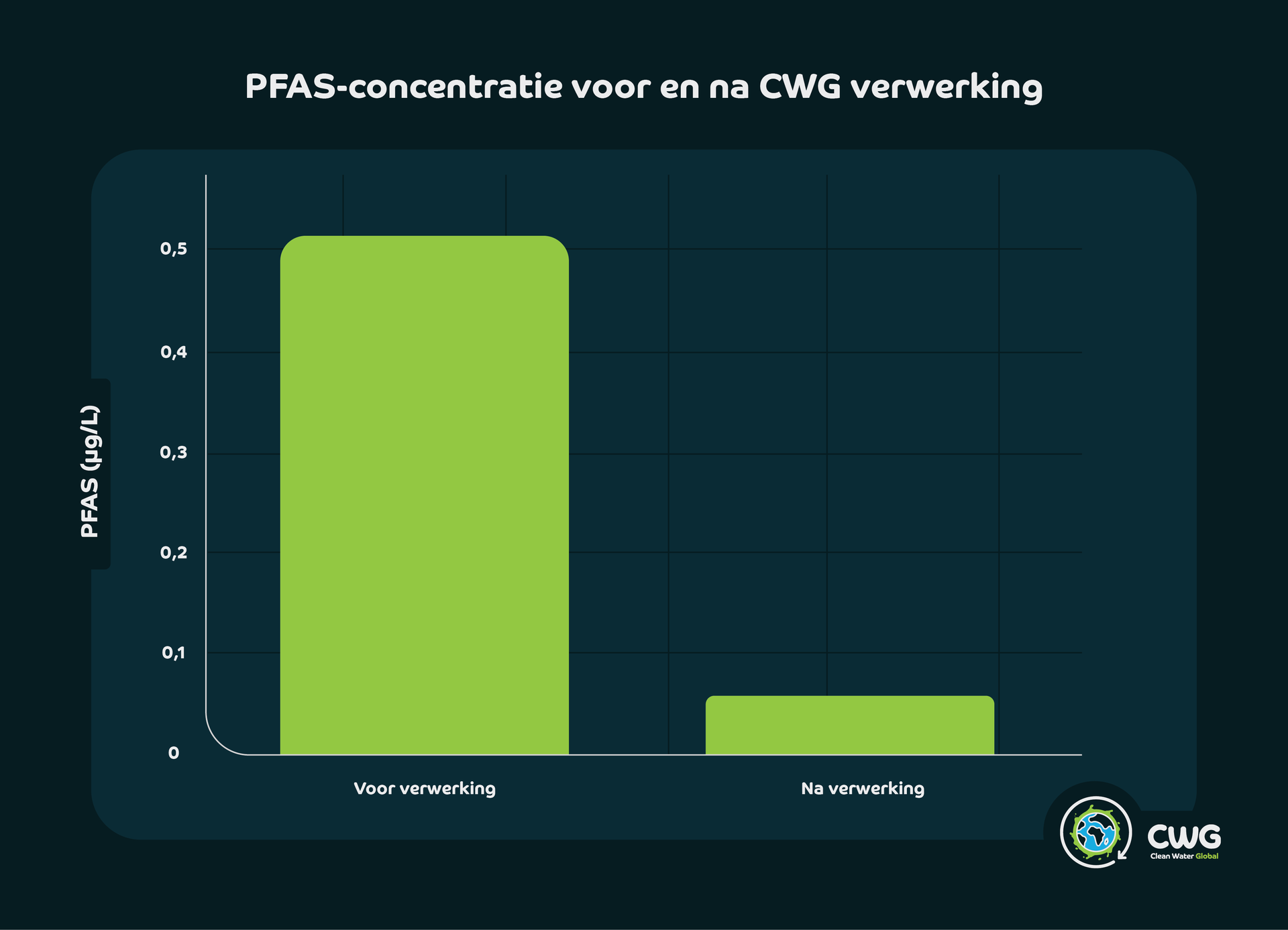
To understand this clearly, we had samples analysed by Eurofins ECCA, an accredited laboratory for PFAS measurements.
Among other things, we examined:
- rinse water originating from water-based paint
- streams before processing
- streams after they have been treated through the CWG system
From these analyses, three key conclusions emerge:
- Rinse water from water-based paint can contain PFAS.
In some streams we see measurable values. This confirms that paint rinse water can be a relevant PFAS source. - When rinse water is collected and processed via CWG, the PFAS concentration in that stream drops significantly.
More importantly: this rinse water no longer enters the normal sewer system and thus the wider water cycle.
3. Prevention at the source is the strongest lever.
The less rinse water and paint residues disappear via the drain, the less PFAS reaches our rivers, canals and ultimately our drinking water. 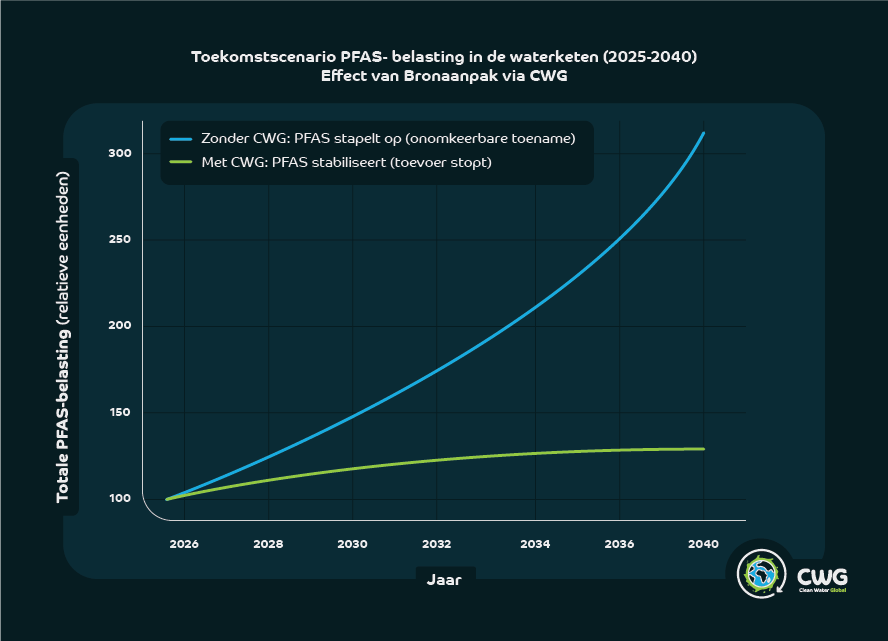
How the sector is already moving
One important signal we see: professional painters and businesses are willing to take responsibility.
In practice, we notice that:
- more and more painters bring their rinse water, paint residues and used materials to deposit points
- wholesalers are installing collection units where rinse water, paint residues, rollers, brushes, sealant and buckets are collected safely
- companies use our visuals and certificates to show their customers that they also handle their waste stream responsibly
Our role in this is clear:
- we provide collection units and deposit points
- we collect these streams and ensure they are processed correctly
- we make it practically feasible for painters and companies to keep their waste stream out of the sewer
This is what we call our circular promise: not a perfect world, but a concrete step to reduce pollution at the source.
The missing link: the consumer market
Where things still go wrong today is with DIY painters.
- Private individuals usually have no access to a deposit point.
- There is little awareness of what to do with rinse water and paint residues.
- The assumption often remains: “it’s water-based, so it can go down the drain.”
That is not a matter of bad intentions, but of a lack of structure.
In our scenarios we see that:
- the professional sector can reduce its impact by using CWG
- the DIY market continues to cause a steady PFAS inflow, simply because there is no guided system in place
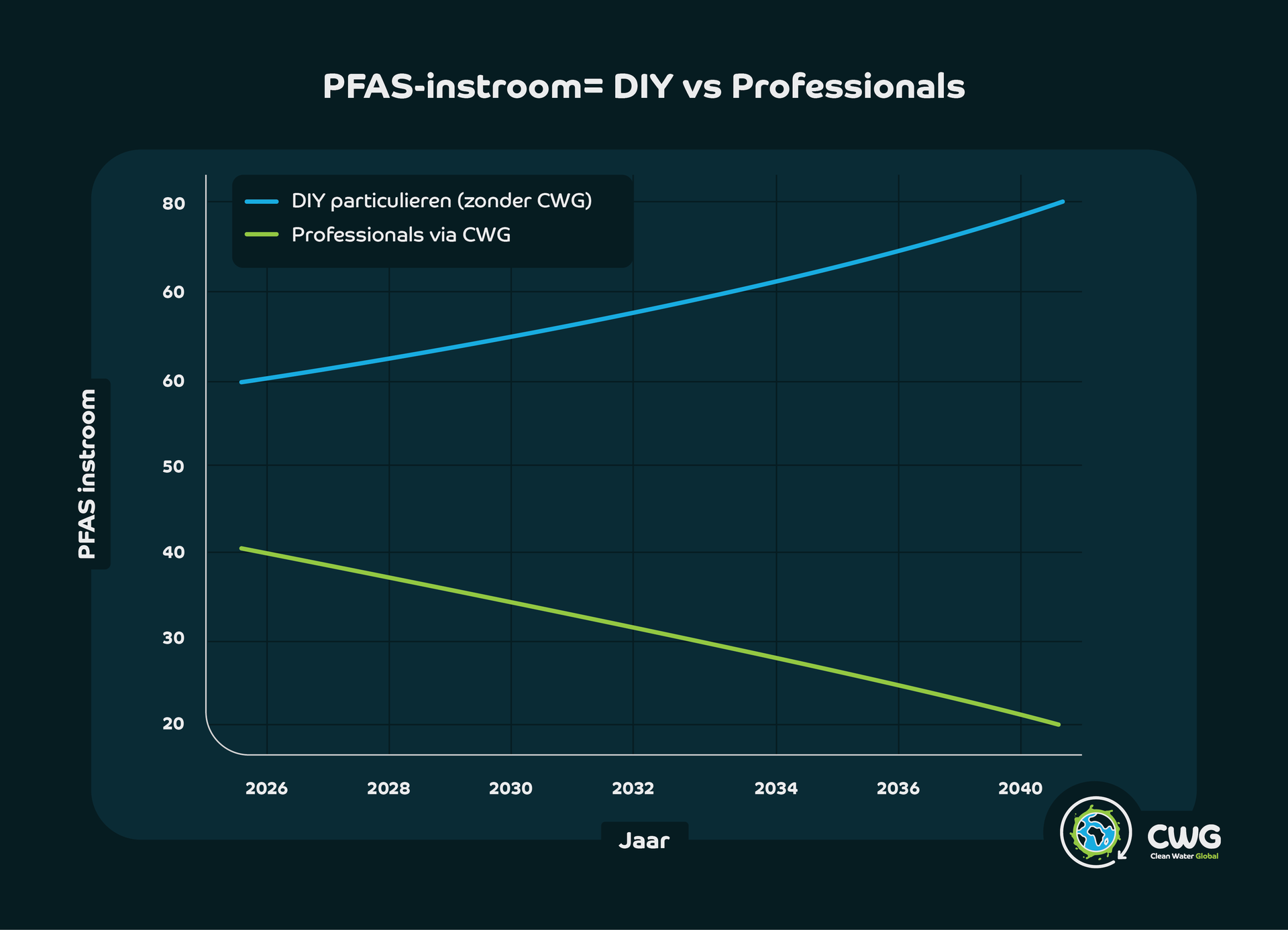
Professionals are proving that it can be done differently. The consumer market currently lacks the same level of support.
Our mission: flattening the PFAS curve
Our mission at Clean Water Global is clear:
- We want the waste stream of the paint industry rinse water, paint residues, used rollers, brushes, sealant and buckets to be processed in a responsible way.
- We want to slow down and flatten the further increase of PFAS in our water circulation as much as possible.
- Not by pretending PFAS is not present in paint, but by preventing it from unnecessarily ending up in sewers and surface water.
You can see this reflected in our graphs: without adapted processing, PFAS load continues to rise; with proper collection and processing via CWG, that curve becomes significantly flatter.
Reaching out to policymakers: bringing consumers on board
The next step is not only technological, but above all organisational. That’s why we are reaching out to politics and public authorities:
- to explicitly include paint rinse water and paint residues in the conversation on PFAS and water quality
- to develop awareness campaigns for consumers, just as has been done for glass, paper, PMD and residual waste
- to make solutions accessible: recognisable drop-off points, clear instructions, simple rules
Professionals prove every day that it works when a system is in place. The consumer market deserves the same clarity and structure.
What you can already do today
Are you a painter or a company?
- Do not rinse rollers and brushes in the sink.
- Ask your wholesaler about deposit points or a CWG collection unit.
- Communicate to your customers that you not only deliver a neat paint job, but also have your waste stream processed correctly.
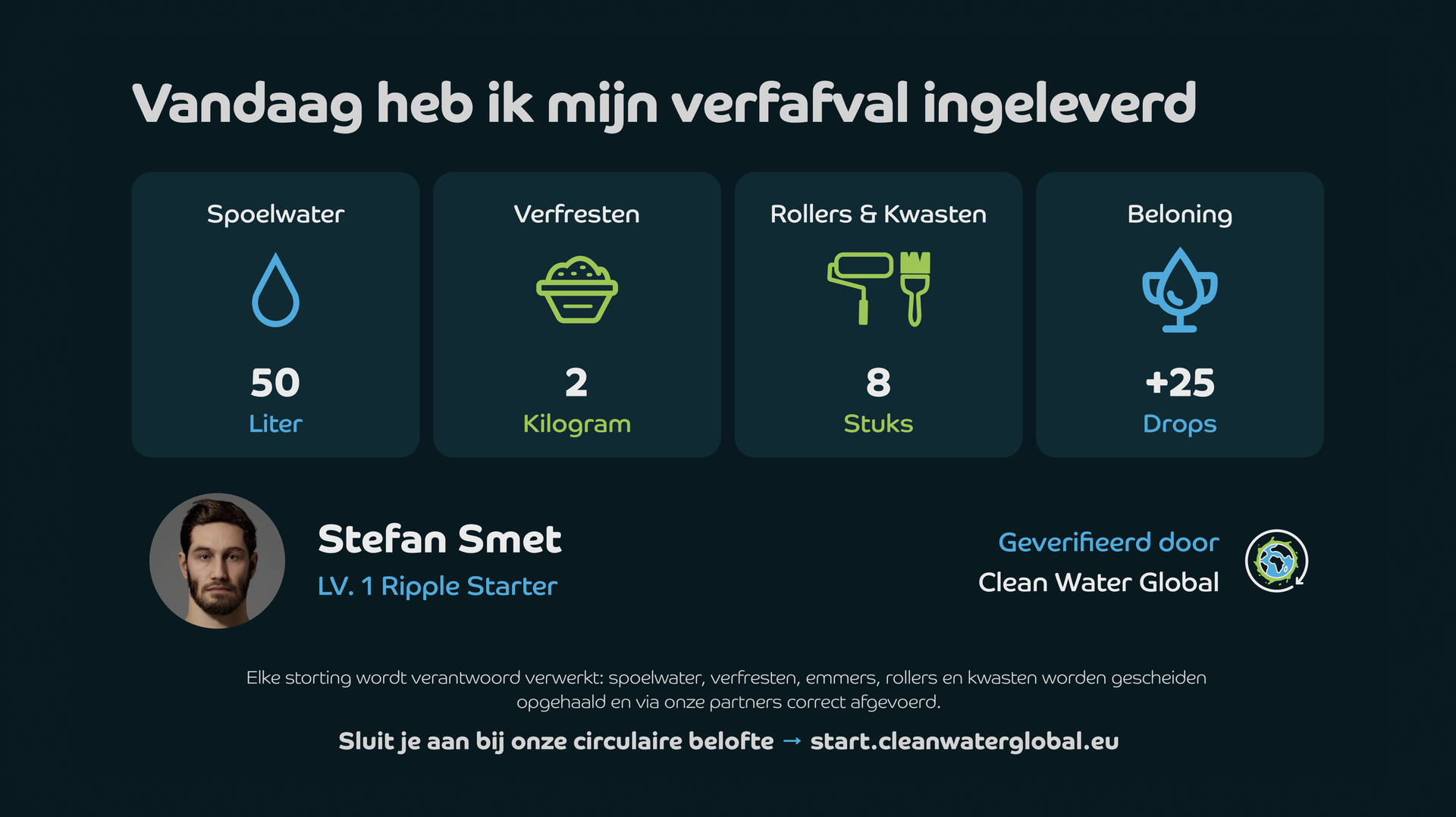
- You can demonstrate that your waste stream has been processed responsibly using the certificate in your app. You can also use this as marketing and share it easily online, so your customers can see that you work in a responsible way.
Are you a wholesaler or supplier?
- Explore the possibility of installing a collection unit.
- Help your customers hand in their rinse water and paint residues separately.
- Make waste processing part of your service, not just of your sales.
Are you a policymaker or involved in local government?
- Include paint rinse water and paint residues in discussions about PFAS.
- Support pilot projects and collection points.
- Use initiatives like CWG as a partner to roll out local solutions.
PFAS Week at CWG: data, context and collaboration
During this PFAS Week, we are sharing:
- the results of our PFAS analyses
- graphs that make the impact of correct processing visible
- insights from the field with painters, wholesalers and companies
- our vision on how we can flatten the PFAS curve together
Not to point fingers, but to give a clear view of the problem and to work together on solutions at the source.
We cannot and do not want to remove PFAS from paint itself.
But we can decide whether it ends up in our rivers and, eventually, in our drinking water
That is what we work on every day at CWG. 💧